
Begin with the potential for serious harm
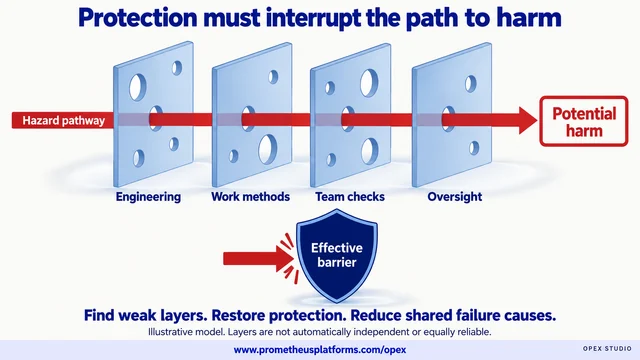
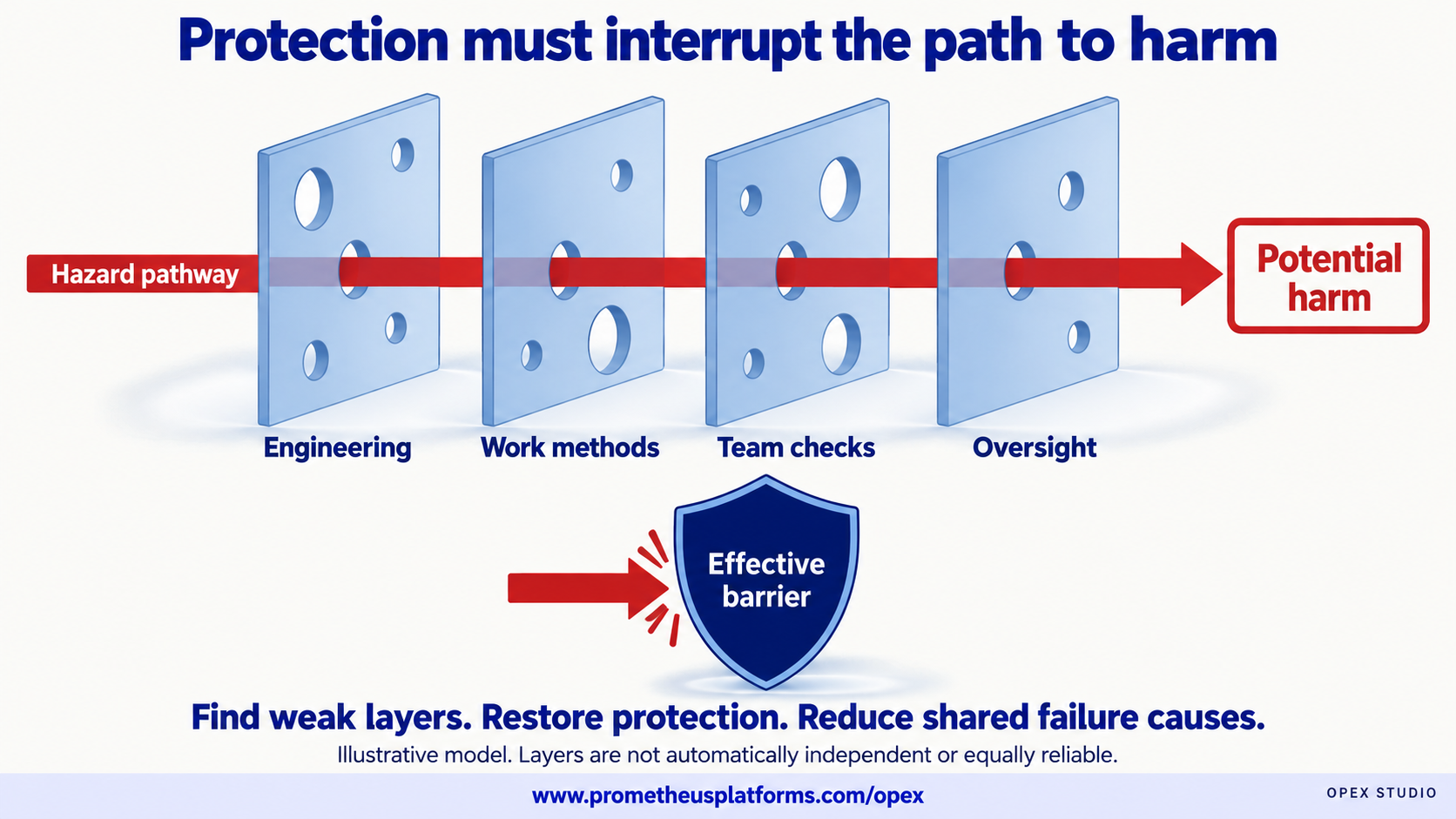
A task can expose someone to fatal or life-changing harm even when previous attempts ended without injury. Start with the hazard, the people who could be exposed and the credible consequence. Include routine production, maintenance, fault recovery, contractors and changes between shifts. An absence of injuries is not proof that protection is effective.
This educational package uses the title Fatality and Serious Injury Prevention. Its earlier source edition used FSI to mean Fatality or Serious Incident. The scope still includes high-potential events and discoveries where no injury occurred. Such signals help teams improve protection before a serious outcome.
Three workstreams, one protected system
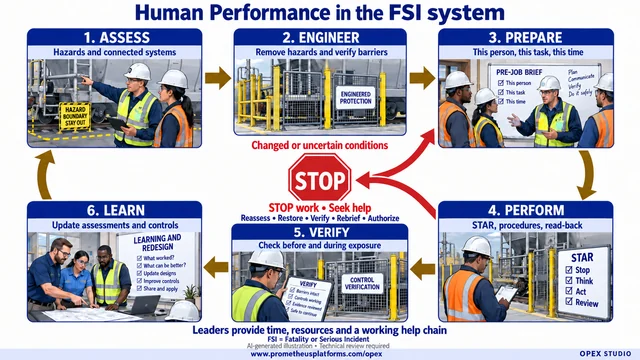
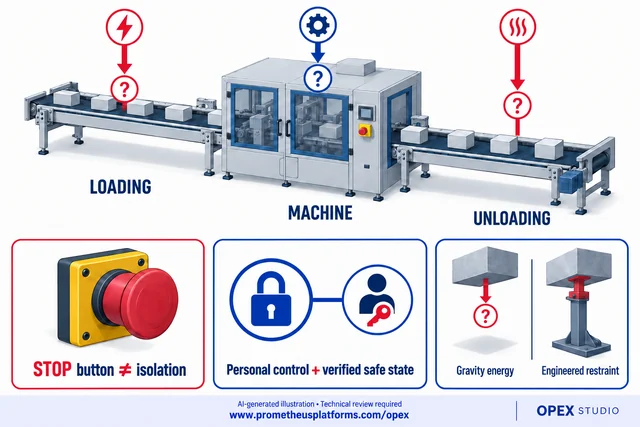
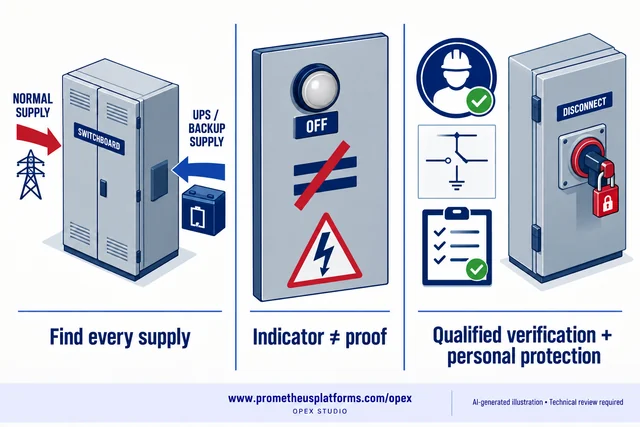
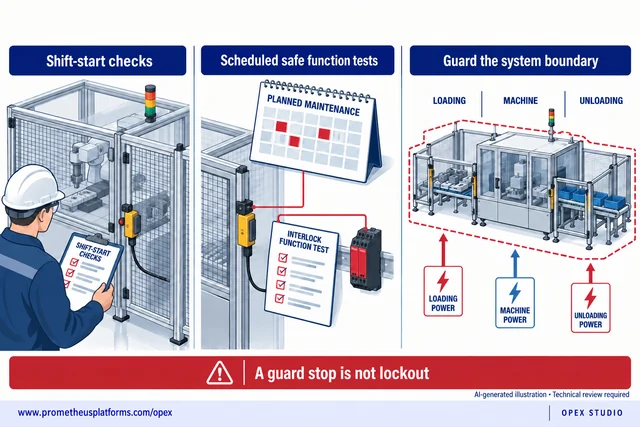
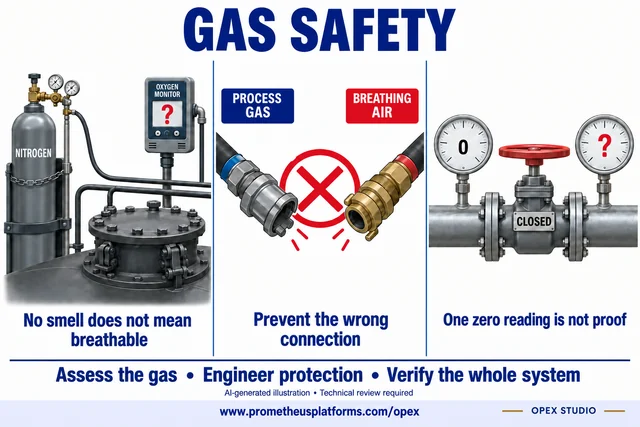
First, challenge the design: can the hazardous task or exposure be removed, substituted or separated? Second, define and sustain the protective functions through the Critical 8 systems. Third, support people with usable methods, preparation, clear communication and a response to uncertainty.
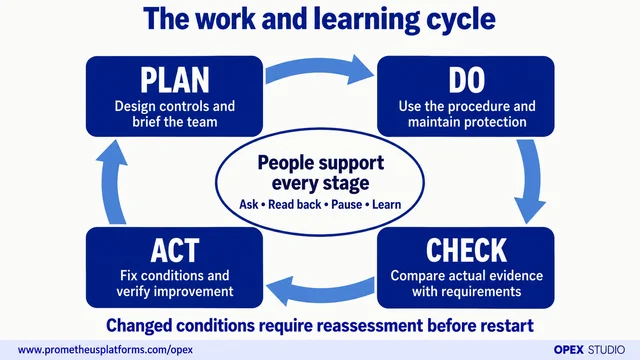
These are connected responsibilities. Human Performance helps people operate and improve a protected system; it cannot compensate for a missing required safeguard. Verification takes place before exposure and during work, with further owner checks and assurance. Learning returns to the design and the method.
Swipe or scroll across the diagram →
- Engineered protection: reduce dependence on repeated perfect responses.
- Critical controls: establish what must work, who owns it and what evidence proves it.
- Human Performance: prepare for this person, this task and these conditions.
Try the blocked-crossing example
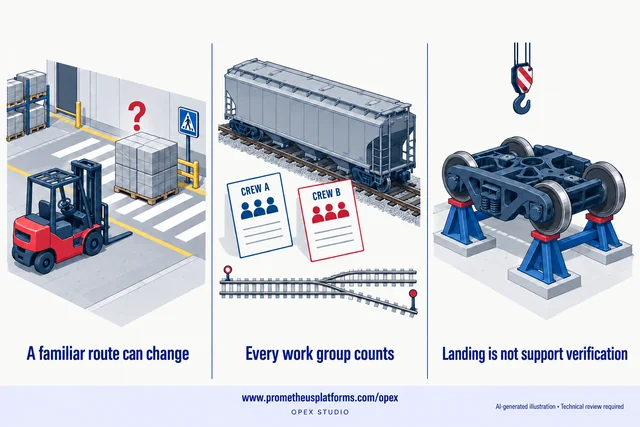
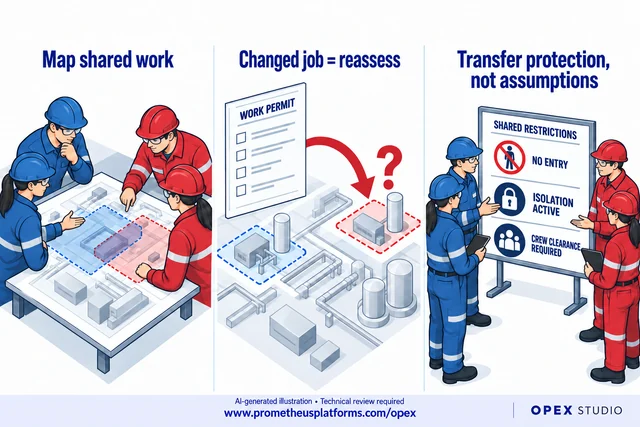
A stack of material obscures a pedestrian crossing beside a vehicle route. The usual route is unavailable and a delivery is due. What would you need to know before choosing an alternative? Identify the exposed people, vehicle movements, sight lines and interactions with other crews.
Feedback: asking everyone to be more careful leaves the changed exposure unresolved. Protect the affected route and involve the competent route owner. Consider whether the crossing can be removed or the flows separated. An alternative needs an assessed design and verified protection; a painted line alone does not establish adequate separation.
Now change the situation: the stack is gone, but the route has been altered for another contractor. Reassess the actual arrangement, verify the applicable controls and rebrief affected people. The lesson is to connect a design decision, control evidence and shared understanding, not to memorize one crossing layout.
Use the package within its scope
Read the three workstream lessons, explore the relevant Critical 8 topics and practise the scenarios. Use the tools to structure a discussion about evidence and responsibilities. The examples are fictional and the methods are educational proposals.
This package does not establish local technical acceptance, equipment authorization, competence or legal compliance. Actual work depends on approved asset-specific methods, competent people and the required emergency capability. A learning score or completed form cannot authorize work with an unresolved required control.
Learning material for team discussion. Apply your site’s approved procedures, competent-person assessments and applicable requirements to actual work.
Take this learning to the team
Choose the language and format for your session. Review drafts with your safety and operations leads before adapting them to local work. A download is learning material, not authorization to perform a hazardous task.
English resources
- Integrated prevention learning overview (PPTX, 276 KB) ↓Teaching and local review edition · v1.0
- Coordinated prevention learning guide (DOCX, 14 KB) ↓Teaching and local review edition · v1.0
Sources & further reading
Use the original source to check its scope, terminology and current requirements.