
Understand the exposure
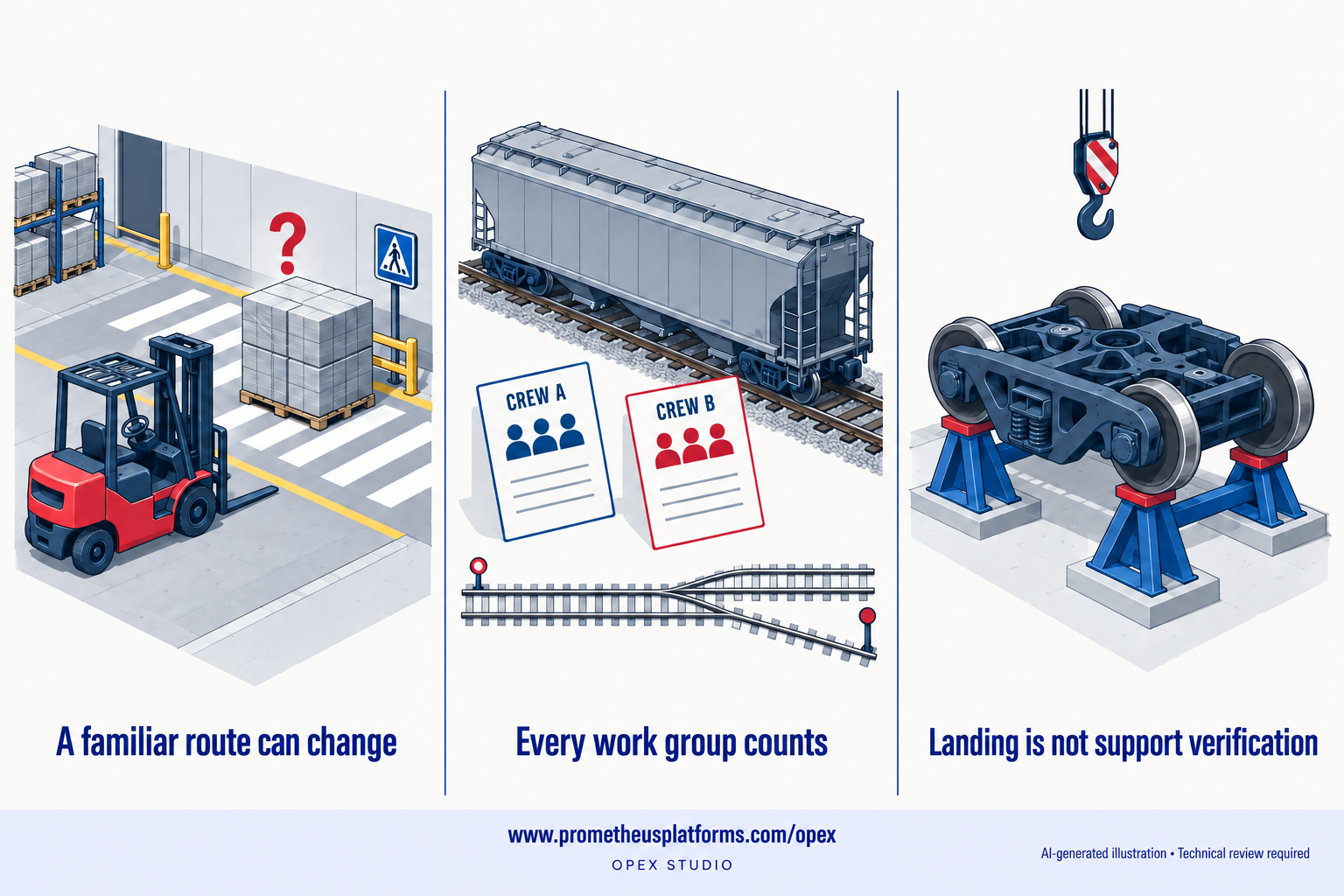
Assess routes, crossing points, visibility, load stability, reversing, parking and delivery interfaces. Include temporary works, pedestrians, contractors and multiple rail crews. A familiar route can change when material is stored, a vehicle is substituted or adjacent work moves. The question is which exposure the arrangement prevents, not whether the route has been used before.
Design and establish protection
Consider removing a crossing or separating flows before relying on warning and attention. The accepted arrangement needs suitable boundaries, equipment, movement coordination and control of the load. Rail protection and securement require their own competent methods. A painted line or radio message alone cannot prove that all affected groups are protected.
Verify before and during work
The control owner translates these teaching prompts into asset-specific performance requirements and a safe checking method. Record the actual evidence, its scope and the responsible role. Missing evidence remains Unknown; a required control that fails or cannot be verified creates a STOP condition for dependent exposure.
- Actual route and separation match the accepted arrangement.
- Load, equipment and movement prerequisites have current evidence.
- Changes and all affected crews are included in the briefing and handover.
Practise a decision
A stack obscures a crossing and a driver suggests using the next aisle. What evidence would you request before anyone changes route?
Feedback: Protect the affected crossing and involve the route owner. Assess the alternative and its interactions, verify the required separation and brief every affected group. Do not treat an apparently empty aisle as an assessed safe route.
Changed condition: The obstruction is removed but another rail crew has not reported clear. Keep the movement restricted until the approved coordination and protection requirements are satisfied. A clear view of one group does not establish the status of everyone.
Support the people doing the work
Look-alike routes, delivery pressure and incomplete communication can combine. Ask a participant to explain the boundary, the specific stop cue and the competent help route. Use exact location identifiers in critical messages, with read-back and confirmation.
Transfer the learning
Choose one relevant task and explain the hazard, protective function, evidence needed and condition that would stop the work. Then identify who can resolve a gap and what must be rebriefed before designated restart. Use an approved classroom or tabletop example; do not create a hazardous condition for assessment.
This topic is educational guidance, not an approved equipment procedure or a competence certificate. C8-01 is the stable program identifier. Local technical acceptance, emergency capability and understood instructions remain prerequisites for actual work.
Learning material for team discussion. Apply your site’s approved procedures, competent-person assessments and applicable requirements to actual work.
Take this learning to the team
Choose the language and format for your session. Review drafts with your safety and operations leads before adapting them to local work. A download is learning material, not authorization to perform a hazardous task.
English resources
- Learner practice workbook (DOCX, 11 KB) ↓Teaching and local review edition · v1.0
- Critical 8 one-page recaps (PDF, 732 KB) ↓Design and review draft · v0.13
- Critical 8 teaching slides (PPTX, 3.9 MB) ↓Design and review draft · v0.13
Sources & further reading
Use the original source to check its scope, terminology and current requirements.